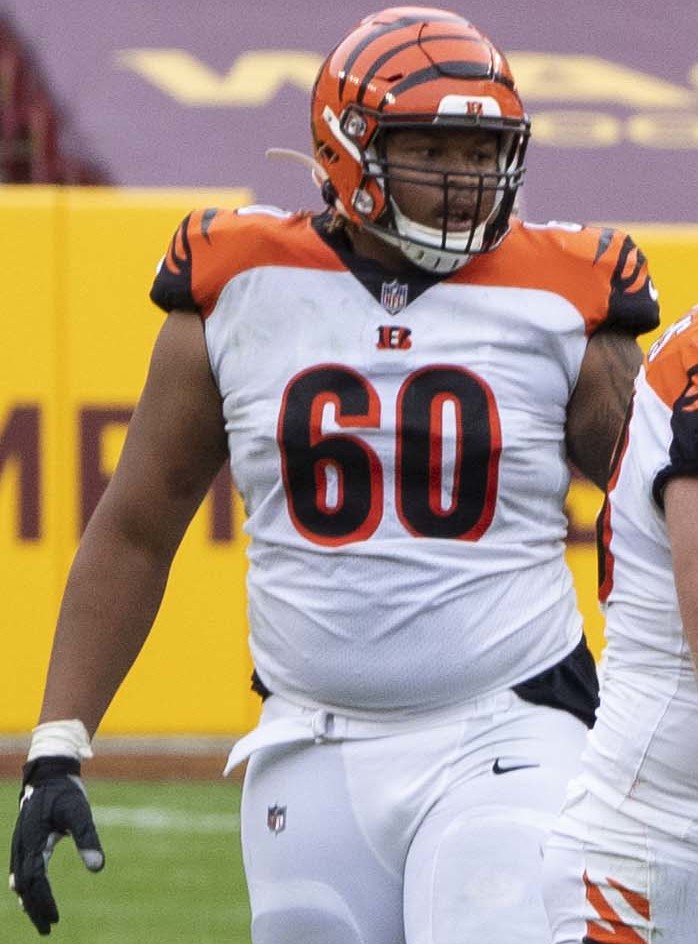

Michael Jordan is back on Baltimore’s practice squad after an eight-day break in that employment. The Ravens re-signed the guard November 18, having released him November 10. Ryan Mink’s club report says Jordan had not yet appeared in a game for Baltimore. The return reopens an opportunity to compete; it does not announce an active-roster promotion or a game-day assignment.
The sequence also keeps two different departures straight. Jonathan Ward’s practice-squad release belonged to Baltimore’s original October 27 announcement, while Jordan’s own release came November 10. The new notice does not disclose Jordan’s individual compensation, a payment to Ward or a guarantee of future work. The next relevant step is still a separate roster decision under the practice-squad rules.
 FULLY GUARANTEED with J. Lalwani
One guard.
Three dated moves.
Jordan signed to the practice squad
Jonathan Ward released in the same announcement
Jordan released from the practice squad
Jordan re-signed to the practice squad
No Baltimore game appearance as of the club report
October 27: the initial opportunity
On October 27, Baltimore signed guard Michael Jordan to its practice squad and released running back Jonathan Ward, the club announced.
Jordan, 28, has 78 NFL appearances and 49 starts, according to Clifton Brown’s club account. His most recent regular-season work was with Tampa Bay in 2025.
Brown connects the signing to guard depth after Vega Ioane’s knee injury against Cincinnati. That context establishes neither a game-day selection for Jordan nor a return date for Ioane.
FULLY GUARANTEEDwith J. Lalwani
The next transaction matters
The practice squad is an employment category with its own contract. Under the collective bargaining agreement, access to the Active/Inactive List requires an additional roster transaction. Experience may help a player compete for that next decision; it does not make the decision for the club.
The money also needs its own account. The announcement does not supply Jordan’s individual compensation terms, resolve obligations from an earlier contract or disclose a payment to Ward. A practice-squad job is not a new full-season salary guarantee. Nor does releasing a player establish a particular cap saving without the relevant terms.
What experience can—and cannot—settle
Our analysis: Baltimore has added a guard with an established professional work history to evaluate. The practical alternatives remain further roster decisions, rather than a promised starting assignment. A need for depth can make experience useful without proving what the coaches will choose after practice. No competing offer or private commitment has been verified here.
For Ward, the release is the other half of the employment change. The notice supplies no next destination. Another opportunity would require another agreement; it cannot be manufactured from the fact that a different player took a place on the unit. Guard and running back are separate football jobs, even when one roster announcement accounts for both.
The Fully Guaranteed verdict: Jordan’s record travels with him, but his next role still has to be earned and selected. Baltimore’s October 27 announcement confirms an opportunity and a departure. The useful follow-up is the next actual roster decision and its terms, not a promotion inferred from a résumé.
Financial & reporting sources
- Baltimore Ravens — Clifton Brown, October 27 signing and release
- NFL–NFLPA executed CBA — Article 33 practice-squad contracts/elevations
- Ryan Mink, Ravens — November 18 return and intervening release
- Baltimore Ravens — dated October 27, November 10 and November 18 transactions
- Baltimore Ravens — current practice-squad roster