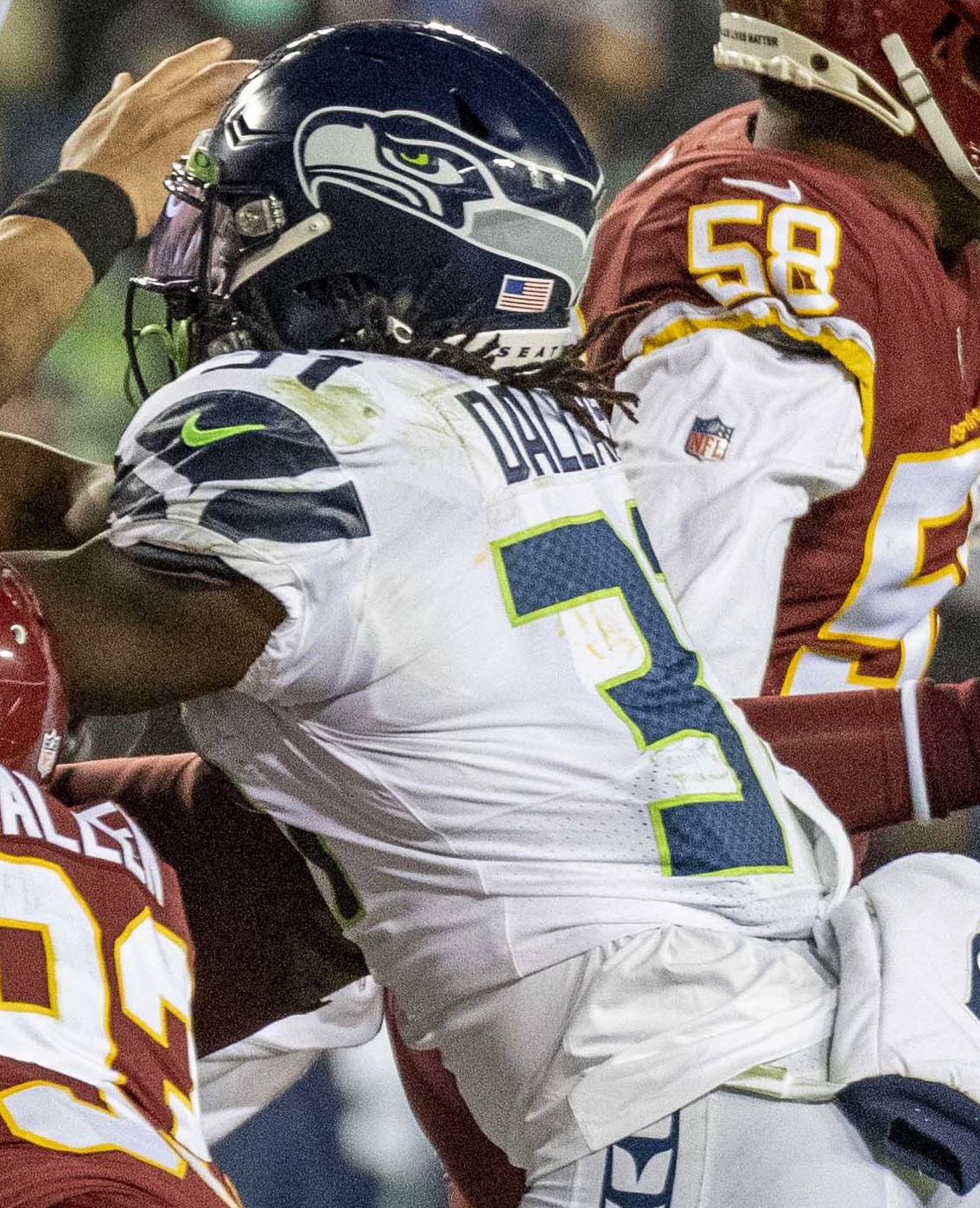

Minnesota signed DeeJay Dallas from its practice squad to the 53-man roster on November 4. The Vikings were bringing back a player who had already appeared in all seven of their games that season, through a combination of elevations and active-roster membership. The job status changed; the working relationship was already established.
The club’s November 4 snapshot puts special teams at the center of that work: 123 snaps in the third phase, compared with 63 on offense. Minnesota reported that Dallas had participated in 68 percent of its special-teams snaps, made six special-teams tackles and helped key Myles Price’s 68-yard kickoff return in Week 1. The percentage is his share of the team’s special-teams opportunities, not a calculation from his offensive and special-teams totals.
His offensive contribution used a smaller sample: four carries for 14 yards and four receptions for 34 yards in those seven games. Those are dated season figures. They establish actual usage without promising a larger workload after the new signing.
 FULLY GUARANTEED
with J. Lalwani
The transaction log supplies the roster path. Minnesota released Dallas and signed him to its practice squad on October 24, with an elevation also recorded that day. The club elevated him again on October 31 before the November 4 active-roster signing. An elevation and a signing to the 53-man roster are distinct decisions; the sequence should keep both labels.
The signing announcement does not disclose the new agreement’s individual financial terms. Prior practice-squad figures, an older active-roster salary or a full-year headline value would not establish what remains due under this particular agreement. Nor does a roster signing promise a permanent place or a specified number of game snaps.
Our read: the strongest case for continuity sits in the work Minnesota has already documented. Dallas has been contributing in two phases, with special teams accounting for the larger recorded snap count. For the player, the new agreement changes his roster footing. The next useful evidence will be the role Minnesota actually gives him, rather than a projected pay increase or workload inferred from the move alone.