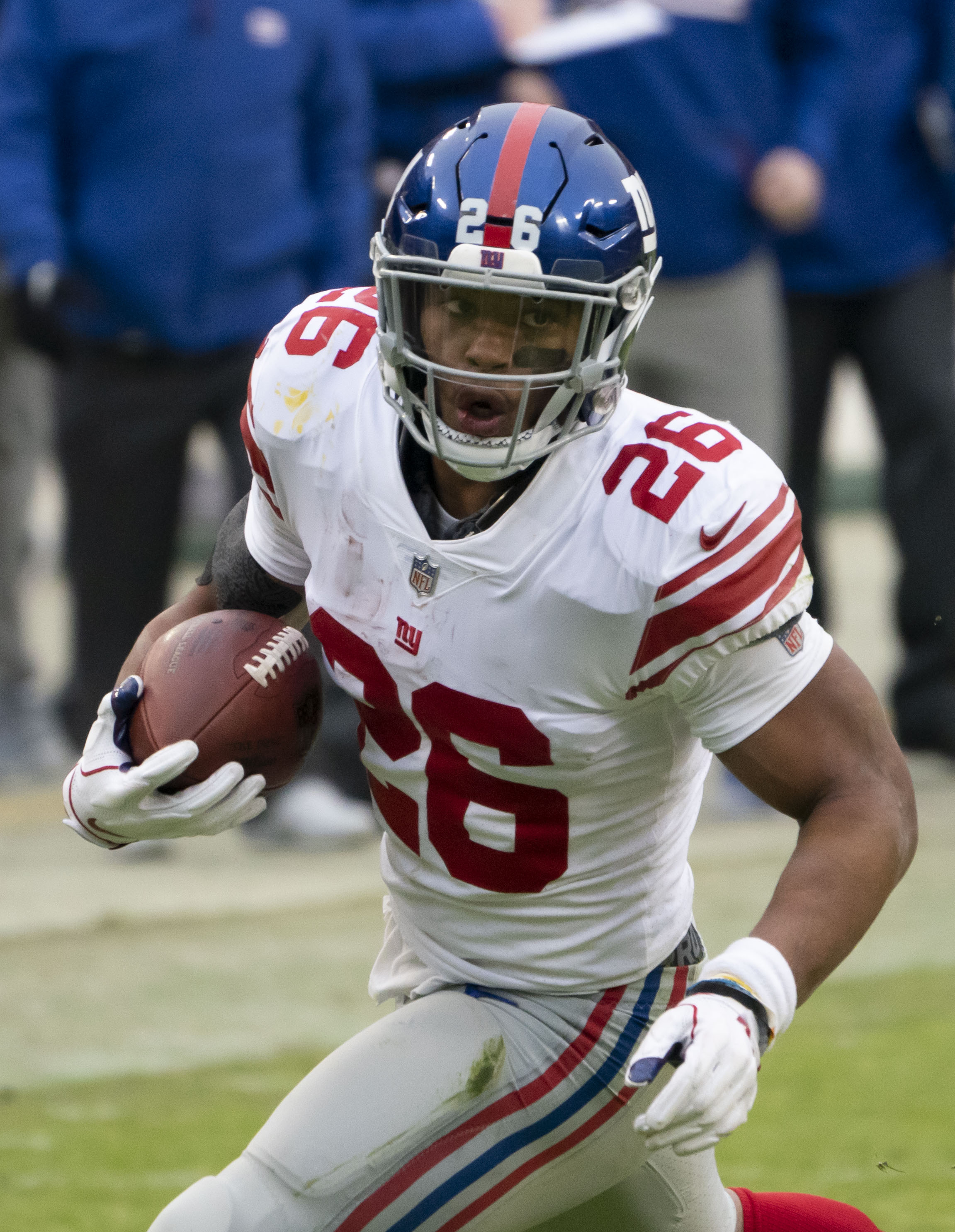

Saquon Barkley told Front Office Sports’ Ben Horney and Daniel Roberts that NFL restrictions required him to leave his Polymarket investment. Their October 28 report says the NFL confirmed the prohibition on player investments in or promotion of sportsbooks and prediction markets, while declining individual comment. Polymarket declined comment.
“I am not in that right now,” Barkley told FOS. His account is not a disclosure of the transaction terms.
An exit is not a disclosed loss
The reporting reviewed establishes no individual stake size, purchase price, proceeds or exact exit date. A compulsory exit does not itself demonstrate a realized loss, and it does not measure the return from staying invested.
 FULLY GUARANTEED
with J. Lalwani
Ownership and wagering are different questions
The ownership question is distinct from whether a player placed a wager. The NFL’s 2022 gambling policy, publicly hosted by the NFLPA, separately addresses employment and ownership interests in gambling entities. It includes restricted exceptions involving diversified passive accounts and small interests in certain publicly traded companies. That older document explains the distinction; it is not presented here as the complete current policy or proof that an exception covered Barkley.
For an athlete considering an investment, permission and price are separate questions. Negotiating a better valuation cannot make an otherwise prohibited holding permissible. A passive title is not enough, either: the actual ownership terms and applicable rules matter. The practical sequence is to establish what is allowed before negotiating how much to commit. That is analysis of the commercial constraint, not evidence of a separate offer or waiver in Barkley’s case.
Players have a separate regulatory voice
The players’ collective position also involves more than investment access. In an April 30, 2026 comment filed with the Commodity Futures Trading Commission, the NFLPA and four other major player unions sought safeguards for athlete safety, due process in investigations and private health and performance data. They expressly declined to take a position in that letter on the CFTC’s legal basis for regulating prediction markets. Those requests were advocacy, not an announcement that the proposed protections had become rules.
That distinction matters to the human stakes. An athlete can be a potential investor while also being a person whose work becomes the subject of event contracts. An equity opportunity and protection against harassment or misuse of private data are different interests. Treating either one as a complete account of what players want would erase the other.
The Fully Guaranteed verdict
Fully Guaranteed’s view: this is a story about a limit on a player’s commercial choices, with the individual financial outcome still unknown. Barkley’s account deserves clear attribution. The league’s stated restriction deserves a precise description. The missing transaction terms deserve to stay missing until they are actually disclosed. A compulsory exit can be consequential without an invented dollar loss doing the explaining.
Financial & reporting sources
- Ben Horney and Daniel Roberts, Front Office Sports — original October 28 Barkley interview and direct league response
- NFL gambling policy, 2022 edition, hosted by NFLPA — historical Sections 3 and 4, endorsement and ownership distinctions
- NFLPA and fellow player unions — April 30,2026 original CFTC comment, safeguards and limits of its stated position