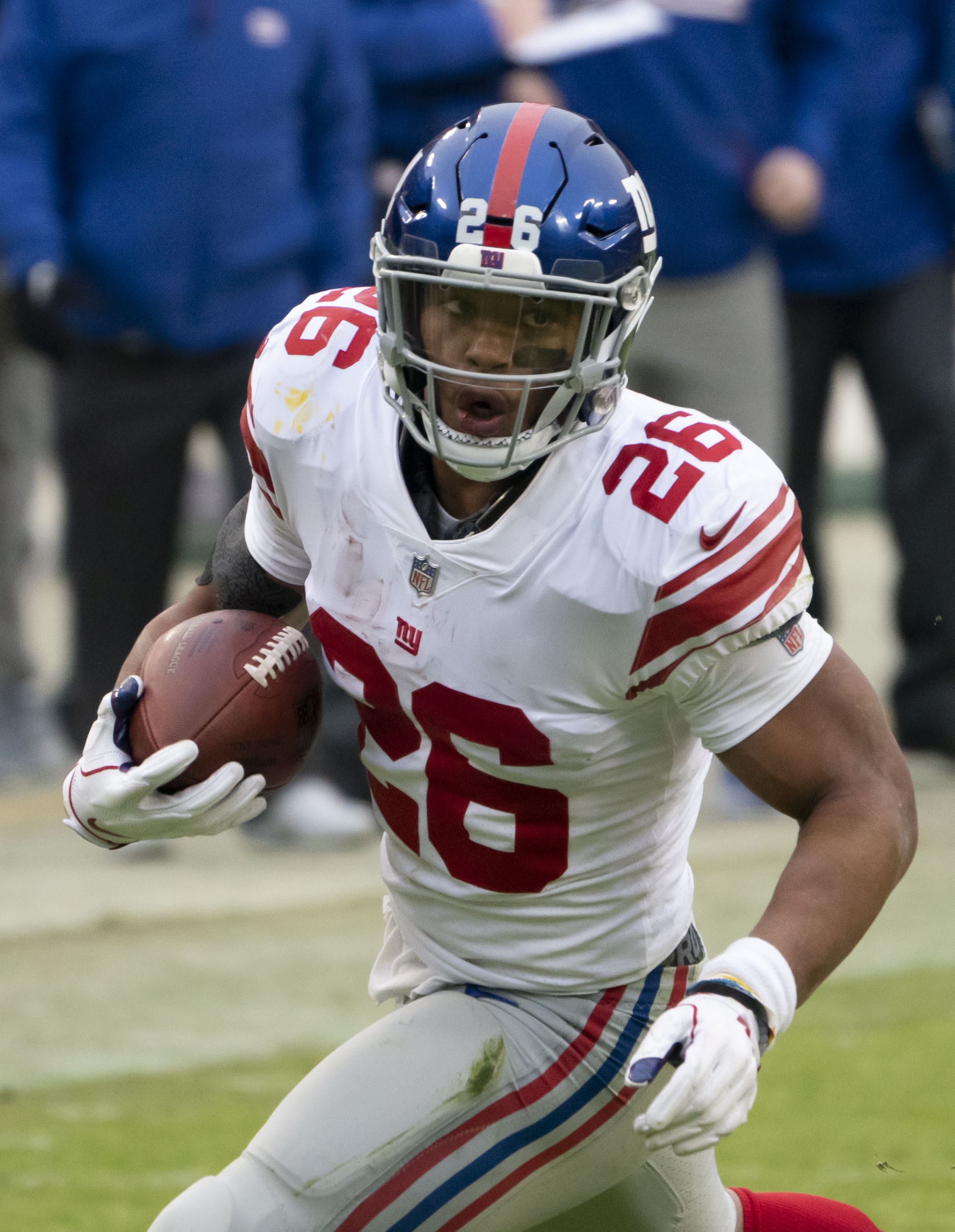

Kyle Kuzma wants NFL players to have an investment opportunity that Saquon Barkley says he had to surrender. The Kalshi investor criticized the NFL’s restriction in a Front Office Sports interview, arguing that athletes should be able to build wealth beyond their playing careers. His own league offers an alternative worth examining: the NBA permits certain gaming-company investments, but surrounds that permission with conditions.
Ben Horney reported November 18 that Kuzma invested in Kalshi late last year. The Bucks forward called the NFL’s treatment of Barkley “b.s.” In an October interview with Horney and Daniel Roberts, Barkley said he was no longer invested in Polymarket because league rules would not allow it. The NFL confirmed the general investment and promotion prohibition to FOS while declining to discuss Barkley’s individual situation.
The NFL’s published policy treats sports-event prediction markets as sports betting. It prohibits players and personnel from participating in, promoting or investing in prediction markets related to NFL games, players or events. That is a separate restriction from the league’s own sportsbook relationships: the NFL says its partnership revenue comes from marketing and sponsorships, rather than betting outcomes.
Basketball’s rulebook separates ownership from operating or promoting the business. Article VI, Section 19 of the current NBA–NBPA agreement permits passive gaming-company interests without management, governance, voting or operational roles. For a company offering NBA League-related transactions, the interest must be below 1% in any ownership class; the limit is below 50% for companies without those transactions. Legal compliance and disclosure to both the league and union within 30 days also apply.
 FULLY GUARANTEED
with J. Lalwani
An ownership lane.
With guardrails.
Per ownership class when a gaming company offers NBA League-related transactions.
No management, governance, voting or operating role.
Disclose the company and ownership percentage to league and union.
NBA–NBPA CBA, Article VI §19. Other conditions apply. These are rule limits, not Kuzma’s disclosed stake. As of November 18, 2026.
Endorsements have separate limits: general branding or non-NBA League sports, with compensation unconnected to NBA wagering or game outcomes. Promoting NBA League-related bets is prohibited. The NBA’s October prediction-market announcement also expressly bars personnel from trading NBA event contracts. These are different permissions, rather than a general exemption from gambling rules. The public reporting does not disclose Kuzma’s precise stake or establish his individual compliance terms.
A valuation is not a player’s payday
The valuation story needs the same distinctions. FOS attributed Kuzma’s entry at roughly $11 billion to a source familiar with the matter and described a reported prospective $65 billion fundraise. In between, Kalshi itself announced a $1 billion Series G at a $40 billion post-money valuation on October 29. The $65 billion figure concerns talks, not a completed round. None of those figures reveals Kuzma’s investment cost, share class, dilution, sale proceeds or realized return.
Kuzma also characterized states’ regulatory opposition as a pursuit of licensing and tax revenue. That is his opinion about their motives. The NFL’s stated rationale emphasizes integrity and oversight; the NBA model attempts to manage conflicts through specific restrictions. Calling an interest passive does not remove every question about incentives, information or public trust. Barring it entirely, meanwhile, closes a source of potential upside to the player.
My verdict: the NBA supplies a more useful alternative for this debate than an unrestricted right to invest in anything. It gives athletes a conditional path to ownership while keeping control and league betting off limits. The NFL can defend a simpler boundary, but Kuzma’s challenge asks it to explain why those narrower safeguards would be insufficient. That policy choice deserves an answer grounded in the actual restrictions, rather than an imaginary windfall for either player.
Related: the original Barkley divestment report.
Financial & reporting sources
- Ben Horney, Front Office Sports — original Kuzma interview; November 18
- Ben Horney and Daniel Roberts, Front Office Sports — Barkley interview and NFL confirmation; October 28
- NFL — published prediction-market policy and partnership definitions
- NBPA — current collective bargaining agreement; Article VI, Section 19, printed pages 123–126
- NBA — official October 26 trading restrictions and integrity framework
- Kalshi — October 29 announcement: $1 billion Series G, $40 billion post-money valuation