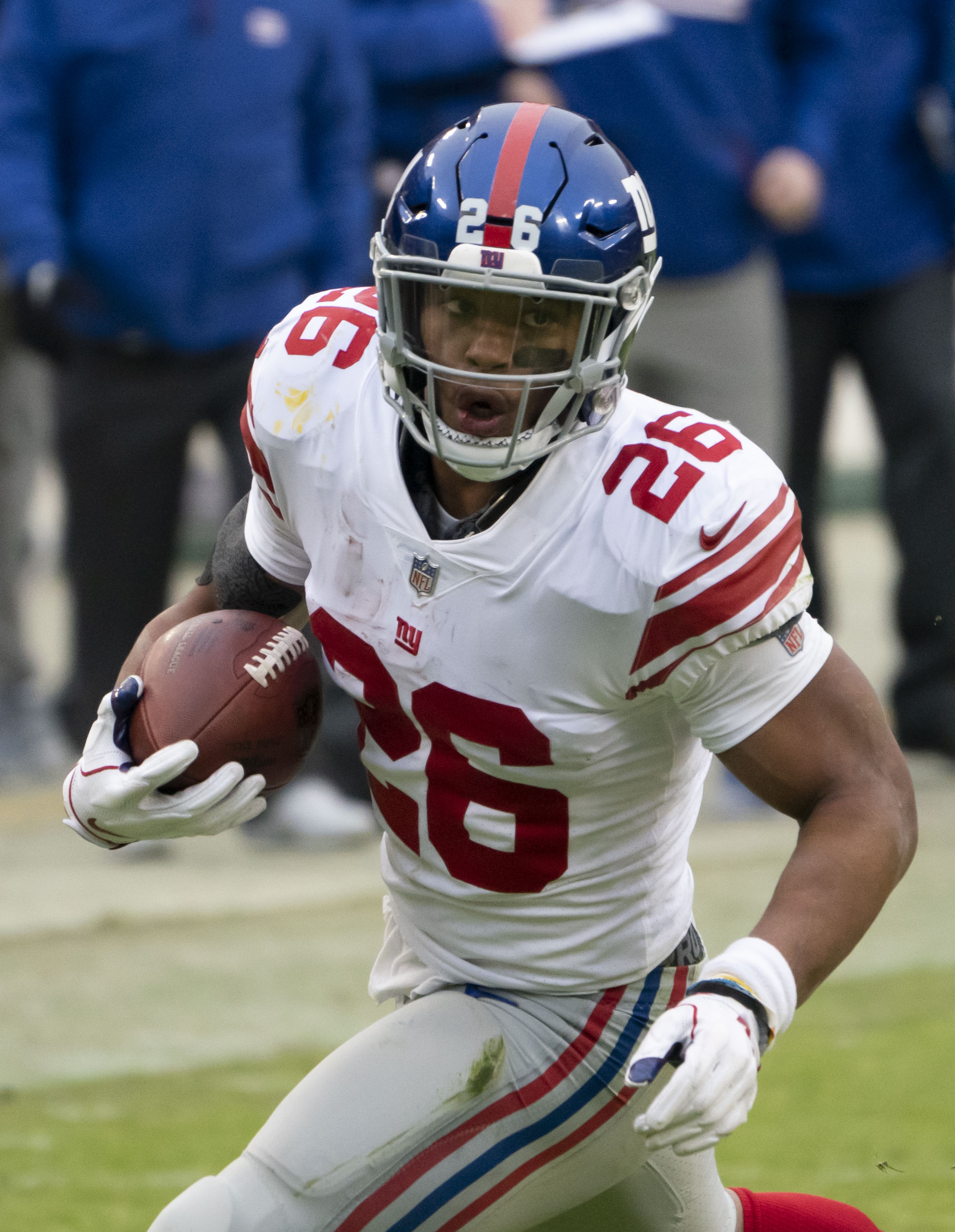

Bill Barnwell’s latest ESPN column proposes eleven deadline trades, including Saquon Barkley to Minnesota and Khalil Mack to Detroit. These are the analyst’s scenarios, not reported club agreements. The useful exercise is to examine how their conditions would distribute risk. The NFL’s official calendar sets the actual trading deadline at November 10, 4 p.m. Eastern; a proposal does not reserve a place before it.
In Barnwell’s Barkley scenario, Philadelphia receives a 2027 third-rounder. It becomes the better of Minnesota’s two thirds if Barkley gains at least 500 regular-season rushing yards and the Vikings reach the playoffs; otherwise, Philadelphia gets the lesser. At least 150 postseason rushing yards plus a Super Bowl appearance escalates it to a second-rounder. Those are proposed triggers, not an existing conditional obligation.
Our analysis: a conditional pick gives the seller a share in a successful outcome while allowing the buyer to tie part of the acquisition price to results. The detail matters. A player threshold and a team threshold are two tests, and both must be stated when both are required. The final draft position also matters: a round describes a band of possible selections, not one fixed asset or a guaranteed amount of surplus value.
 FULLY GUARANTEED
with J. Lalwani
A conditional pick does not settle the cash
Barkley’s future cash is a separate ledger. Over The Cap’s October 24 snapshot lists $16,000,100 in scheduled 2027 cash and $2,500,000 guaranteed in that season. Neither number should be relabeled as the entire original guarantee or as a verified unpaid balance today. The cash-flow figure is also distinct from the listed $13,057,100 cap charge. A proposed pick does not settle which future payments a club would retain, change or assume.
Barnwell’s other illustrative package sends Mack and Donte Jackson to Detroit for 2027 fourth- and sixth-round picks, with Los Angeles absorbing about half the remaining money. That subsidy is part of his hypothetical design. It is not a reported Chargers commitment to pay. The contemplated draft compensation and the contemplated cash allocation must be read together.
Mack’s current deal provides the accounting starting point. OTC lists a one-year 2026 agreement worth $18,000,000, fully guaranteed, including a $10,000,000 signing bonus and $8,000,000 base salary. Adding the bonus again would double count it. Treating the full original value as a new club’s remaining cash requirement would answer the wrong question. A transaction audit needs the effective date, payment status, remaining salary and any documented change to the agreement.
Count the alternatives as well as the cost
The same caution applies to salary-cap savings. NFL Football Operations explains that committed compensation and its cap recognition can fall at different times. Cash a club might avoid paying is not automatically the amount of cap room it creates. Before approving an actual football decision, a front office would need the trade-specific accounting alongside the personnel case. This article assigns no exact acquisition cost or cap saving to a trade that has not happened.
The human stakes sit inside those conditions. A player could change workplaces while his performance determines part of the return paid to his former club. That does not make the player responsible for every team outcome written into the terms. For each club, keeping the player is also an alternative to trading him; spending elsewhere, accepting a different package or making no deal can produce a different mix of immediate help and future flexibility.
The Fully Guaranteed verdict: a plausible destination is the beginning of an audit. Write down who sends each pick, when a condition changes it and who pays each remaining dollar. Then compare the football benefit with the alternatives. Barnwell has offered thought experiments to test. An actual transaction will require actual terms, and its numbers should be checked afresh rather than inherited from the scenario.
Financial & reporting sources
- Bill Barnwell, ESPN via authorized ABC7 syndication — eleven hypothetical trade proposals, October 23, 2026
- Over The Cap — Barkley existing contract cash, guarantees and cap snapshot, October 24, 2026
- Over The Cap — Mack current 2026 contract and included bonus, October 24, 2026
- NFL Football Operations — official November 10, 2026 trading deadline, 4 p.m. Eastern
- NFL Football Operations — base salary, signing bonus and dead-money definitions