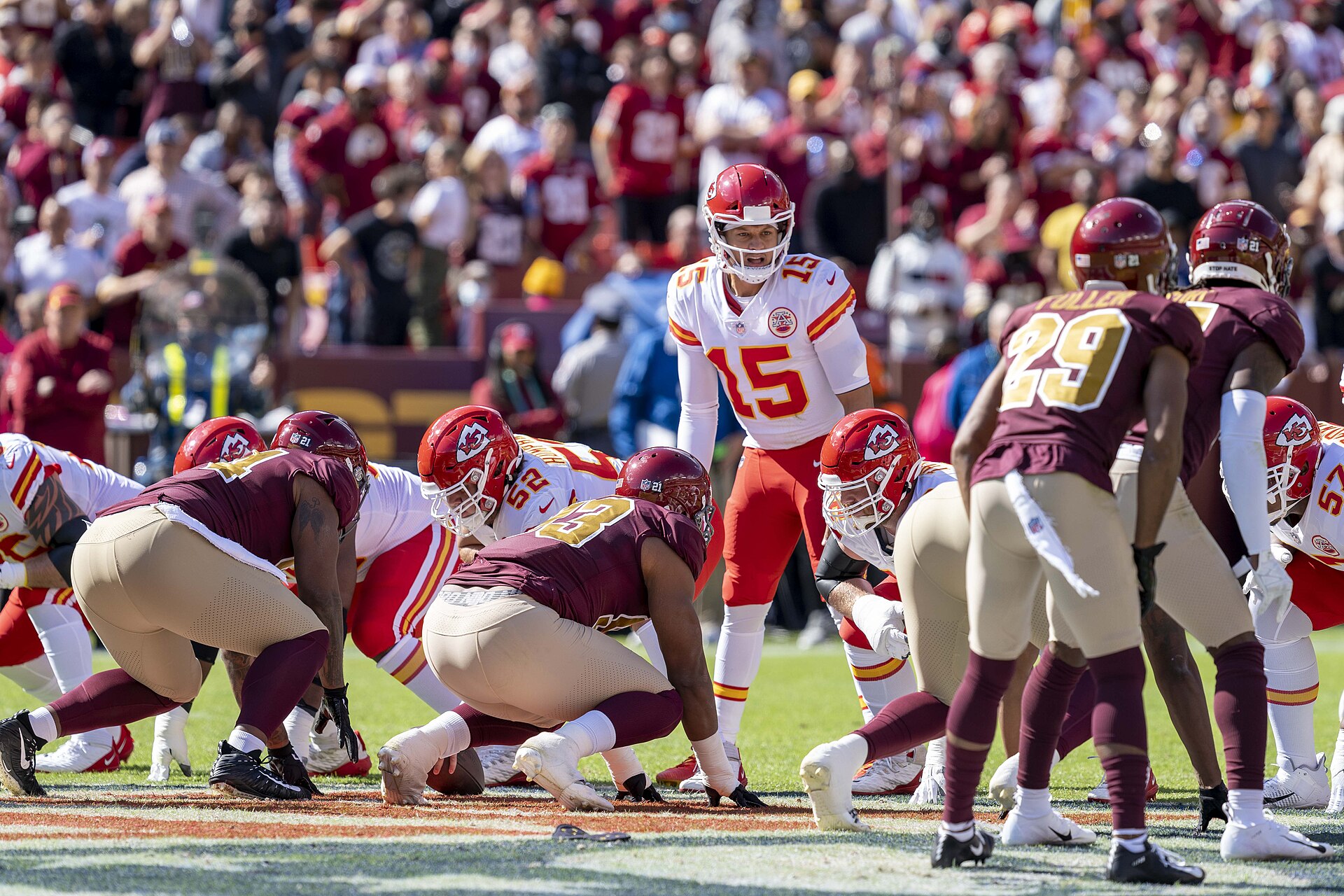

Kansas City has been making calls about adding a wide receiver, according to Adam Schefter’s appearance on The Pat McAfee Show as reported Monday by Charles Goldman of A to Z Sports. Goldman’s account also preserves the uncertainty: an attempt to add help does not establish that a deal is imminent or that the Chiefs will complete one.
The club’s own records explain part of the available roster picture. Kansas City lists Tyquan Thornton’s placement on Reserve/Injured and Justin Watson’s practice-squad signing on October 12. Andrew Armstrong signed to the active roster from the practice squad on October 23; Watson received a standard elevation on October 24. Those are different roster routes, with different implications for how a player becomes available on game day.
The Chiefs also listed Rashee Rice and offensive lineman Jaylon Moore among their Week 7 inactive players. Their recap records a 20–3 defeat in Seattle, the team’s first loss of the season. These dated records establish who was unavailable and what happened in that game. They do not establish Rice’s return date, a future medical clearance or the result of any trade discussion.
The roster already supplies one alternative
That makes the existing room an actual alternative for the front office to evaluate. Armstrong’s promotion and Watson’s elevation are documented actions; their presence does not prove the offense has solved its receiver problem. Our analysis: a front office weighing an outside addition should compare the proposed role with the players it can already use, rather than treating an outside name as an upgrade merely because it is available.
 FULLY GUARANTEED
with J. Lalwani
The deadline is fixed; the terms are not
The timetable is clear even when the market is not. NFL Football Operations lists November 10, 2026, at 4 p.m. New York time as the end of trading for the season. That deadline limits the time to reach an agreement. It does not oblige a prospective seller to accept Kansas City’s offer or establish that either club has made one.
Goldman’s article moves from the Schefter account into a survey of possible receiver options. Those are separate evidentiary categories. His assessment of potential fits does not show that the Chiefs called a particular club about a particular player. This story identifies no named negotiation, agreed compensation or player request.
Our analysis: a workable transaction needs agreement on both the football role and the price. Kansas City would need to decide what improvement it expects and what assets it is prepared to exchange. A counterparty would need a return that makes giving up its player preferable to keeping him. Without an actual offer, neither club’s reservation price can be read from the public discussion.
The contract needs its own ledger
The contract question also waits for an identified transaction. The inspected report supplies no proposed receiver’s acquired salary, guarantee obligations or negotiated treatment of compensation. An original contract total would not answer those questions on its own. A financial assessment would need the actual contract and proposed terms, including which obligations remain and which accounting belongs to each club.
That leaves a real distinction between being active in a market and finding an acceptable deal. More calls can improve the information available to a buyer, but they do not establish a discount. The deadline can constrain both sides; the value of waiting or acting depends on alternatives that the public report does not price.
There are human stakes inside the roster as well. A promotion or elevation gives a player an opportunity, while an outside addition can change the competition for work. Those possibilities do not tell us what any player privately wants. Injury designations should likewise remain roster and availability facts, rather than a basis for inventing a medical outlook.
Fully Guaranteed’s view: the Chiefs’ reported search is worth tracking through the role, the return and the contract obligations that an actual proposal would reveal. The club has already used internal roster options. The next meaningful step in the trade story would be verified information about a specific negotiation or completed transaction. Until then, the calls are the development; the price and outcome remain unresolved.
Financial & reporting sources
- Charles Goldman, A to Z Sports — October 26 account of Schefter’s McAfee appearance and separate target analysis
- Kansas City Chiefs — official 2026 roster transactions
- Kansas City Chiefs — Week 7 inactive players, October 25
- Matt McMullen, Kansas City Chiefs — October 26 game recap
- NFL Football Operations — 2026 important dates