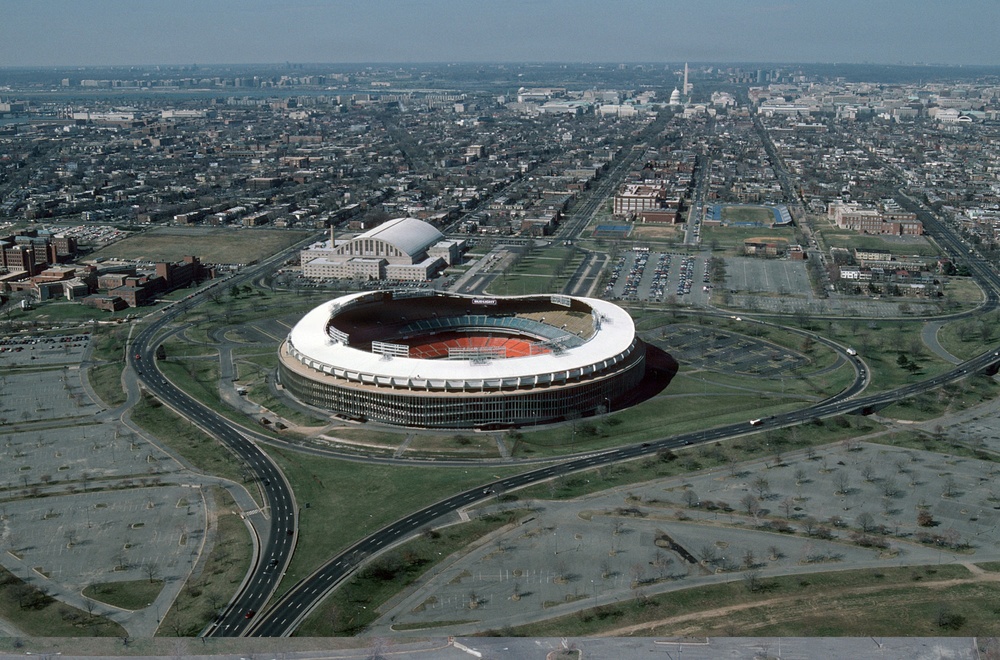
Washington’s plan for the new Commanders stadium has a line item for a game the city hasn’t won. The D.C. Council gave initial approval Tuesday to a planning bill that would exempt admission to certain championship events from District sales tax. The Super Bowl is on the list. Across the same roughly 180 acres, the harder question is when the people who will live there get their keys.
The Council took two separate actions November 10. It approved the RFK Campus Master Plan, a framework for six districts along the Anacostia. It also passed the amended RFK Campus Planning Amendment Act on first reading. The second measure would change the District’s comprehensive plan to allow zoning to move forward and includes the proposed admissions-tax exemption. Council Chairman Phil Mendelson said the bill would return for a second reading December 1.
 FULLY GUARANTEED
with J. Lalwani
The tax break buys a chance to compete
The committee print limits the exemption to ticket sales for the Super Bowl or its successor as the NFL championship, NCAA Division I men’s and women’s basketball tournament games and men’s and women’s FIFA World Cup matches held at the new stadium. A regular Commanders home game, a concert and the parking charge are outside that provision. Mendelson said the committee had been told that organizers consider the exemption when choosing host cities. The NFL still controls where it puts its championship.
D.C.’s existing stadium law imposes an additional 4.25% sales tax on gross receipts from otherwise taxable event tickets. The new provision would create a narrow ticket-tax exemption at the venue. Its fiscal cost would depend on which events Washington lands and how much taxable ticket revenue those events would otherwise generate. The committee packet’s draft report did not supply a dollar estimate. The bill still needs a second Council vote, mayoral approval or a veto override, and congressional review.
The city has a trade-off. If a host requirement applies, keeping the tax could cost Washington a chance at the event and its taxable sales. Offering the exemption clears that potential hurdle while leaving the award, other bid conditions and the District’s costs up in the air.
The stadium and the neighborhood have different deadlines
The master plan sets a direction for housing, recreation and commercial uses around the stadium. At markup, councilmembers pressed for a schedule that makes it possible to see how much housing gets built in each phase. Ward 5 Councilmember Zachary Parker pointed to the Office of Planning’s timetable. If the Council acts on the plan and land-use map changes by December, the office expects to send a campus-wide zoning amendment to the Zoning Commission by April 2027. The commission could take final action by December 2027 under that scenario. A zoning milestone still leaves open when a household can move in.
The transit debate had a similar shape. Councilmembers Charles Allen and Wendell Felder discussed planning guidance that would keep open the possibility of another Metrorail connection. Allen said the amendment did not propose a new station at Oklahoma Avenue and Benning Road. Mendelson described separate language tying transportation-fund spending to transit, walking and cycling access. Those details matter well beyond kickoff. Where utilities and garages go can make a future connection easier or harder to build.
D.C. can give itself a better chance at one weekend with a ticket-tax provision. Its leverage over what happens the other 51 weeks comes through the zoning and phasing decisions still to come. The next useful milestone for residents is a housing schedule with dates and quantities they can check.
Financial & reporting sources
- D.C. Council November 10 legislative meeting agenda
- D.C. Council November 10 legislative meeting transcript
- D.C. Council November 10 Committee of the Whole transcript
- D.C. Office of Planning RFK Campus Master Plan
- Council docket for B26-0625
- D.C. Council Committee of the Whole packet and committee print
- D.C. Code § 47–2002.08, football stadium sales taxes