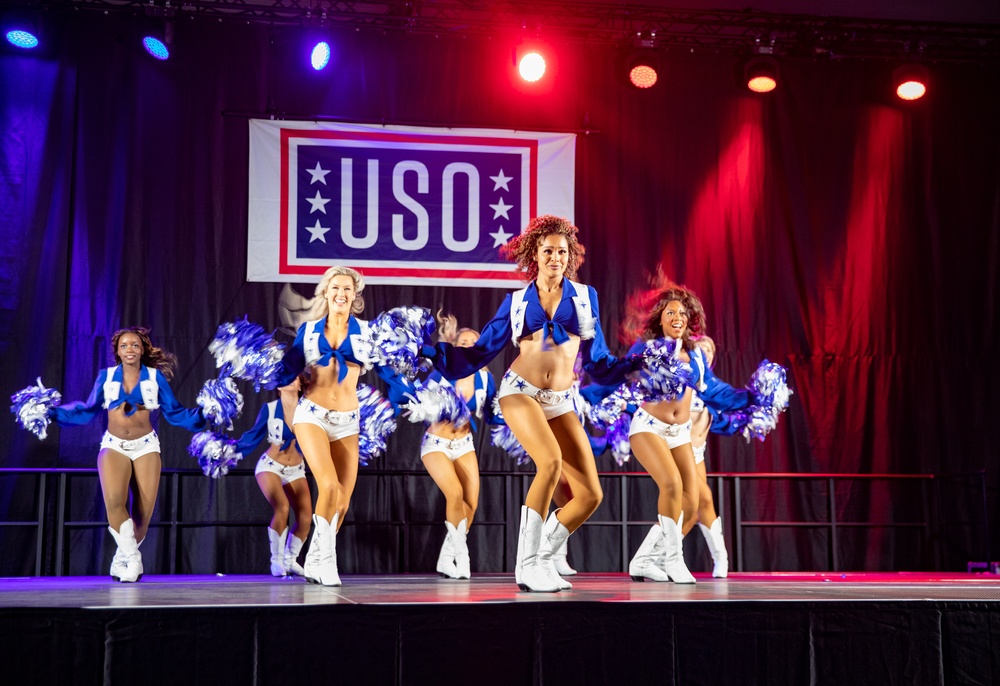
Photo: Spc. Adrian Greenwood / U.S. Army · DVIDS original source · Public-domain image and use notice. The appearance of U.S. Department of War visual information does not imply or constitute Department of War endorsement.
The Dallas Cowboys and their cheerleaders have agreed on who will represent the dancers at the bargaining table. Their joint announcement, shared October 23 by labor reporter Jen Ramos-Eisen, says the organization voluntarily recognizes the newly formed Dallas Cowboys Cheerleaders Association as the squad’s collective bargaining representative. The statement identifies the DCCA as an independent union and says the parties will begin collective bargaining.
That is a consequential agreement about representation. The announcement does not publish a new wage scale, a benefits schedule, a bargaining timetable or a completed collective bargaining agreement. A reader cannot turn recognition into an immediate additional raise, infer a first-contract deadline, or treat every possible workplace protection as already secured. The next document matters because it would explain what the parties actually promise to one another.
 FULLY GUARANTEED
with J. Lalwani
What recognition changes
The National Labor Relations Board describes collective bargaining as negotiations over wages, hours and other employment conditions, undertaken in good faith. Its guidance also makes clear that the duty does not force either side to accept a proposal or make a concession. That distinction leaves room for serious negotiation without promising a particular outcome. Recognition establishes the representative; the bargaining process determines whether the sides can agree on terms.
Our analysis: the association can carry shared priorities into one negotiation rather than leaving the entire conversation to individual performers. Its value will depend on the substance of any eventual agreement. Pay for different duties, scheduling, benefits and ways to resolve disagreements are useful questions for a reader to examine in a future contract. They are examples of matters to watch, not a reported list of DCCA demands.
The Cowboys have a different problem to solve: how to maintain the performance and public identity they value while agreeing on the conditions under which the work is done. The joint statement praises the dancers’ talent and dedication. That public appreciation supplies no dollar amount, but it gives the negotiation a clear subject: the people delivering a recognized part of the organization’s presentation. Admiration and an enforceable employment term do different jobs.
Visibility, opportunity and the people doing the work
There is also a human constraint behind the familiar uniforms. In original Associated Press reporting by Jamie Stengle and Josh Funk, labor sociologist Victor Chen argued that the squad’s high profile and Netflix series likely helped its position. He also pointed to the competition for artistic and entertainment jobs. That is an attributed assessment of bargaining conditions, not evidence that the Cowboys threatened to replace this group or that the dancers can dictate terms.
The financial audit here begins with restraint. Friday’s recognition statement does not disclose new compensation, so there is no new hourly rate to multiply into a season’s salary. Nor would a single game-day payment describe all the work involved. Any future comparison needs the pay basis, covered duties, paid hours, contract period and applicable conditions. Historical raises reported elsewhere cannot establish the next agreement’s value or a current individual performer’s annual earnings.
Chris Bumbaca reported for USA TODAY that the Cowboys had no further comment when contacted. The record therefore supports a narrow, substantial development: the club has agreed to recognize this independent representative. It does not establish a league-wide cheerleaders’ union, put the dancers under the players’ collective agreement, or supply an announced strike. Those would require their own evidence. The current story concerns this squad’s relationship with this employer.
What the next agreement must answer
The verdict: a seat at the table changes the negotiation before it changes a paycheck. The DCCA has gained a recognized role in bargaining, and the Cowboys have chosen recognition as the route forward. The next test is the agreement the sides produce: what it covers, how it is carried out and what recourse exists when they disagree. Until those terms are public, celebrate the representation milestone without inventing the settlement of every economic question.
Financial & reporting sources
- Cowboys / DCCA joint recognition statement — original image shared by Jen Ramos-Eisen, October23; directly read
- Jamie Stengle and Josh Funk / Associated Press via Boston25 — original recognition reporting and Victor Chen’s attributed analysis
- Chris Bumbaca / USA TODAY via Yahoo — joint announcement and team’s response to further questions
- National Labor Relations Board — collective bargaining rights and employment-condition subjects
- National Labor Relations Board — duty to bargain, first-contract resources and limits on compelled concessions