
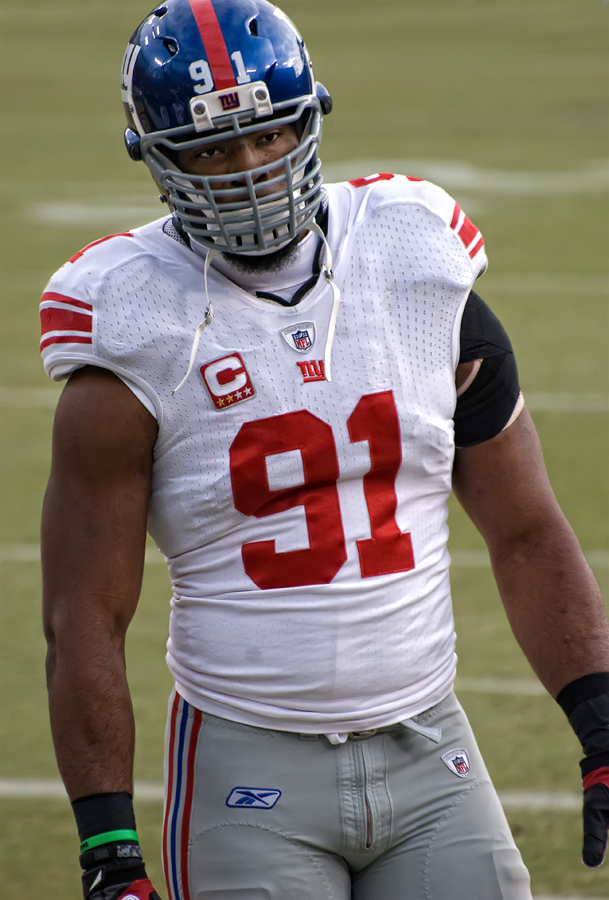

Justin Tuck’s answer to an 18-game season begins with the years after it. In an interview with Front Office Sports editor-in-chief Dan Roberts, reported Thursday by Mark Maske, the retired defensive end said he would limit himself to 16 games if he were still playing. His objection centers the quality of life that remains after an NFL career.
Tuck acknowledged the owners’ incentive to seek more revenue while opposing the added workload from a player’s perspective. His line was blunt: “I’m only playing 16.” He last played in 2015, before the move to a 17-game regular season. This is a retired player’s hypothetical response, not an announced action by a current player or the NFL Players Association. His health concern is a personal judgment, not a medical risk estimate.
The current collective bargaining agreement puts a different limit in writing. Article 31 permits the league to increase the regular season from 16 games to 17, and expressly prohibits increasing it to 18 or more. It also caps the combined preseason and regular-season total at 20. An 18-game regular season therefore requires a change to that agreement; an owner’s preference alone does not authorize the extra game.
The arithmetic clarifies the size of the proposed change without pricing it. Moving from 17 to 18 regular-season games adds one game per team, an increase of about 5.9 percent in that count. It does not establish a 5.9 percent increase in each player’s snaps, injury risk, salary or retirement benefits. Preseason changes, playoff participation and an individual player’s availability are separate questions. A count of games is useful, but it is not the entire workload bargain.
Article 31 also records how the agreement handled the earlier transition to 17 games: salary references tied to 16 games changed to 17, and references tied to 17 weeks changed to 18, with corresponding changes to specified fractions. That is a negotiated mechanism for the existing transition. It does not supply agreed pay terms for an 18-game season. No new per-player raise, revenue distribution or health-benefit amount follows automatically from the proposal.
Our view: Tuck’s objection identifies the hard part of the negotiation. More valuable regular-season inventory can appeal to owners, while players bear work whose consequences may extend beyond the earning years. The existing 17-game arrangement is a concrete alternative to changing it. If the parties pursue an 18th game, compensation and working conditions belong in the same discussion as the schedule. A retired star can articulate the concern; the players’ collective agreement is what gives that concern a contractual boundary.