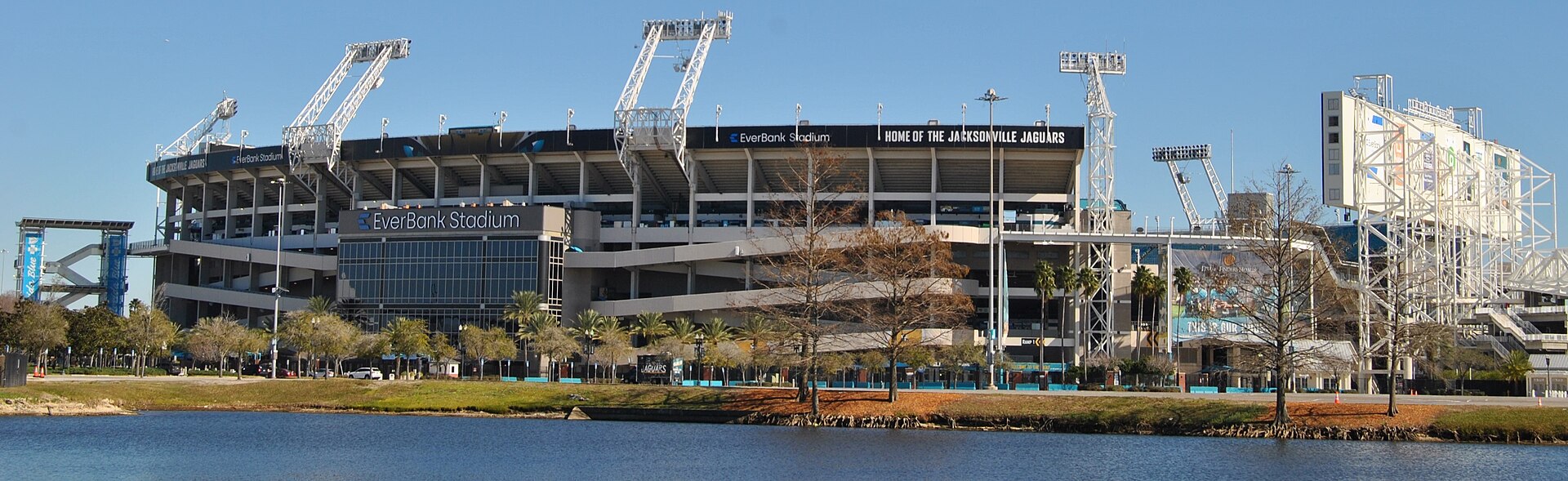

Jacksonville’s stadium spending is back under scrutiny after a November 1 analysis by Reason’s Jon Loesche questioned the economic case for the Jaguars’ renovation. The central problem for readers is that the large numbers describe different things. A public capital commitment, years of modeled business activity and projected tax receipts are not interchangeable measures of what taxpayers receive.
The city’s account of the June 2024 agreement identifies $775 million in public stadium funding and a 30-year lease. That is the financing commitment described in the earlier deal, not a newly approved November expenditure. Retaining the team and obtaining a renovated facility are the public purposes offered by the arrangement. Whether those benefits justify the commitment is a judgment that requires more than a large economic-impact headline.
 FULLY GUARANTEED
with J. Lalwani
The model’s calendar and categories
The Jaguars-commissioned Tourism Economics study is dated August 2023 and models 2028 through 2052, a 25-year period. Its headline forecast is $21.7 billion in total economic impact, with $10.3 billion in direct spending feeding the model. The total includes additional indirect and induced activity. Adding the direct amount to the total would count it again.
The study also projects $1.3 billion in state and local taxes over that period. That is a different category from business activity, and it combines levels of government. It is not a promise that Jacksonville’s own treasury receives that sum, nor a statement of net fiscal profit after the city’s costs. A headline comparison between $775 million and $21.7 billion cannot establish a taxpayer repayment ratio.
The alternative has to be part of the test
The question a public decision-maker needs to answer is incremental value: what changes because of the renovation, compared with a realistic alternative? Ongoing team operations and visitor spending may be economically meaningful without every modeled dollar being new activity created by the public contribution. The existence of a projection does not settle that comparison. Neither does criticism of the projection, by itself, calculate the correct net benefit.
Risk allocation deserves the same attention as the forecast. The public contribution finances an asset with long-lived obligations; economic forecasts depend on future operations, visitors and events. Readers should ask which costs and contingencies sit with each party, what protections the agreements contain and how performance will be measured. This article does not treat a summary announcement as a complete reconstruction of debt service, operating obligations or every contract remedy.
Fully Guaranteed’s view: use the study for what it models and demand a separate fiscal case for the public commitment. The real choice is how to weigh team retention, the facility and competing uses of public funds under uncertainty. Gross economic activity is useful context. It is not a receipt showing that the city has recovered its money.