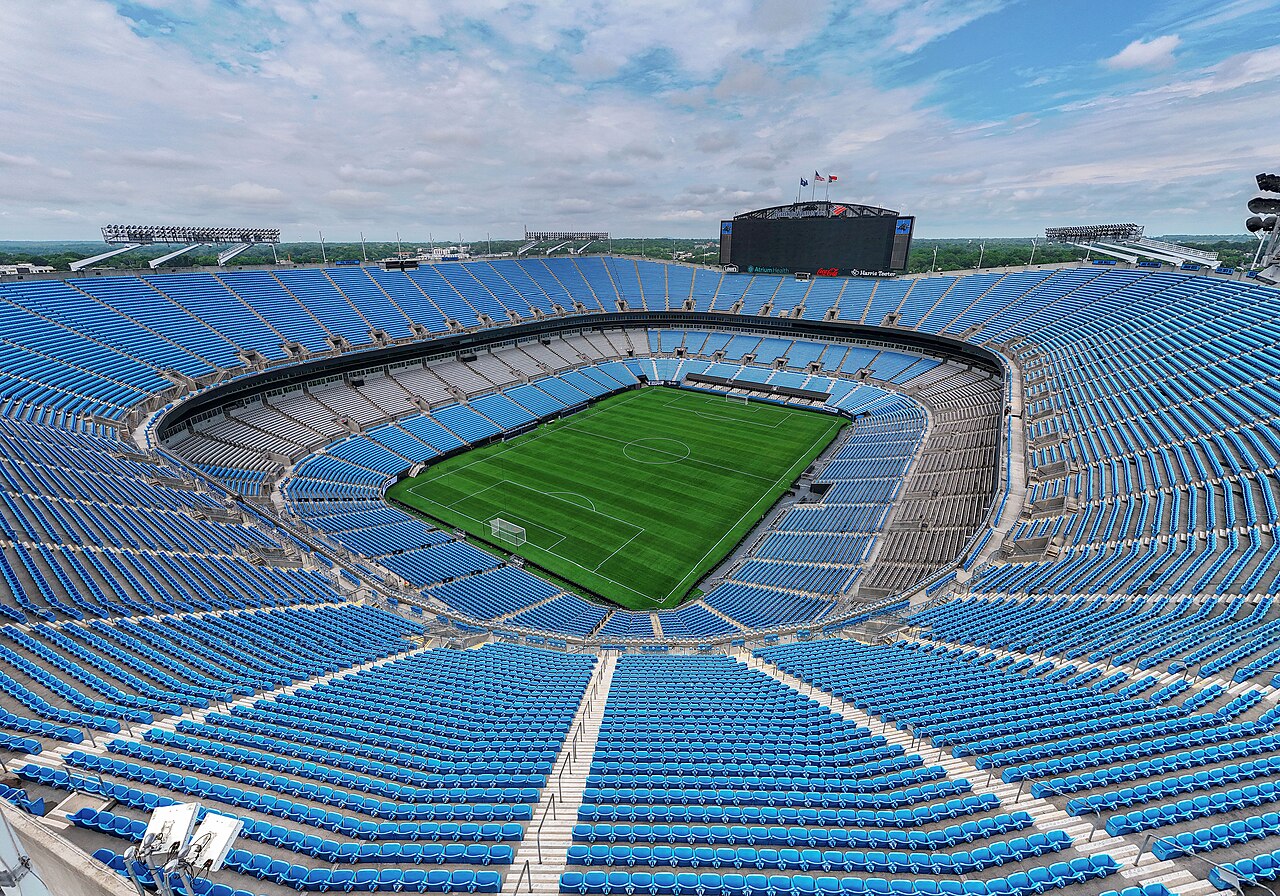

The North Carolina state auditor’s October 28 informational report lists Charlotte’s Bank of America Stadium-project spending through August 2026. It is an opening oversight baseline, not a completed audit.
Its tables show $2,528,684 in construction payments and $632,656 in financing expenses. Adding those subtotals produces $3,161,340. The construction total already deducts $231,444 of retained amounts.
 FULLY GUARANTEED
with J. Lalwani
A payment ledger has a specific job
Those are different measures from an authorization, a project budget or a completion estimate. Adding the retained amount back into money paid would overstate the cash that left the account. Treating early disbursements as a percentage of construction completed would answer a question that the payment ledger alone cannot settle. A project can incur financing costs before producing a finished piece of stadium.
Authorization comes before disbursement
The public commitment has its own history. Charlotte’s June 24, 2024 approved council action authorized agreements and a budget appropriation of up to $650 million for stadium improvements and a new Field House. Its terms said city-funded improvements would be owned by the city and leased to Tepper Sports & Entertainment. City payments to contractors were to follow completed work. That historical authorization is not a receipt showing the entire amount has been spent.
The North Carolina Treasurer’s April 2, 2026 announcement separately recorded Local Government Commission approval of the $650 million stadium financing request. It identified occupancy and prepared-food tax revenue as the source for debt service. Borrowing approval, borrowed principal, payments to contractors and future debt service belong in separate columns. Combining them into one spending total would count different financial events as though they were the same transaction.
An overview is not an audit verdict
The new report does not determine whether all expenditure requirements were met, intended benefits achieved or controls effective. Those questions belong to subsequent oversight.
For the city, the useful next comparison is whether each draw buys eligible work at the agreed price and whether the resulting facilities deliver what the public bargain promised. For the operator, a clear payment record can explain which obligations have been performed and which remain. That is a way to test accountability, not a claim that either side has already passed or failed the test.
What the withheld amount means
Retainage illustrates why the distinctions matter to the people doing the work. A withheld amount is different from cash received. It should not be portrayed as a contractor penalty, a forgiven obligation or a permanent saving without the terms that explain its treatment. Contractors need a reliable route from completed work to payment; the public needs a reliable route from payment to verifiable work. The ledger is where those interests meet.
Tax-funded spending also requires a broader question than whether a renovated venue will look better. A restricted revenue source still represents a public resource. The case for the project has to be assessed against the uses allowed for that money, the obligations taken on and the benefits actually delivered. A disbursement table is necessary evidence for that assessment, but it cannot finish the assessment on its own.
The Fully Guaranteed verdict
Fully Guaranteed’s view: begin with the dollars that can be reconciled, then demand evidence for the promises they are meant to buy. This opening record makes that comparison possible. It supplies neither a clean bill of financial health nor a finding of wrongdoing. Calling it a finished audit would get ahead of the very oversight the public is waiting to see.
Financial & reporting sources
- NC Office of the State Auditor, October 28,2026 original report PER-2026-7041 - spending tables, PDF pages5-6; scope, page18
- NC Treasurer, April 2,2026 - original LGC financing approval and repayment-source announcement
- Charlotte City Council, File15-22932 - June 24,2024 approved authorization, payment and ownership terms; historical record